


Welcome to the latest edition of the weekly Say Yes to Holiness newsletter—designed to help inspire, encourage and accompany you on the path towards holiness.
Welcome to the Twenty-Ninth Sunday in Ordinary Time. In the Gospel yesterday, the Pharisees attempt to entrap Jesus, so they ask Him whether it is lawfult to pay taxes. Jesus’ response is illustrative of the beautiful opportunity we are given to reflect upon what God has done for us, and as a result what we owe to God and to others as we strive to live as faithful disciples in the world.
For the coin bears Caesar’s image, and we, His creation, bear God’s.
This makes Jesus’ response so much more than simply whether we should pay taxes (which we should), but rather it posits an examination of our loyalties, responsibilities, and stewardship. Bottom line being whether we are truly giving God everything that belongs to Him—which is our very selves.
And while we have responsibilities to our families, communities, employers, and governments, none of those responsibilities can replace our primary responsibility to the One who created us.
Therefore, this week’s Food for the Head, Heart, Hands and Feet will seek to inspire, encourage, and accompany us as we work to come to a deeper understanding of our identity as children of God while recognizing where our ultimate allegiance belongs, faithfully fulfill our earthly responsibilities, and offer our entire lives back to the One whose image we bear as we continue our journey towards holiness...
Food for the Head
"Prayer is greatly aided by fasting and watching and every kind of bodily chastisement. In this regard each of you must do what you can. Thus, the weaker will not hold back the stronger, and the stronger will not press the weaker. You owe your conscience to God. But to no one else do you owe anything more except that you love one another.” — Saint Augustine, Augustine Day By Day, p. 143
Saint Augustine reminds us that our conscience belongs to God, which means that although we live in the world and have legitimate responsibilities to others, our ultimate allegiance must always belong to Him. Jesus does not dismiss the obligations we have to civil society in Sunday’s Gospel. Instead, He places those obligations within their proper order, reminding us that our responsibilities as citizens, family members, employees, employers, and neighbors must never take precedence over our duty to God.
This is particularly important in a world where we are constantly being pressured to choose sides—political, cultural, social, and even within our own families and communities. Yet Jesus does not ask us to place our ultimate trust in any earthly authority, institution, or ideology. Rather, He asks us to place our trust in Him and to allow His truth to guide our decisions and actions.
This doesn’t mean we abandon our responsibilities in the world. Quite the opposite! It means that we fulfill those responsibilities according to a conscience formed by God’s truth rather than by the changing opinions and expectations of those around us.
Perhaps this is an opportunity for each of us to examine whether we are allowing our faith to shape our opinions or whether we have begun allowing our opinions to shape our faith. Are we more concerned with being accepted by others than being faithful to God? When faced with difficult decisions, whose approval are we seeking?
When we understand that we bear God’s image, we begin to recognize that our first responsibility is to reflect that image faithfully in everything we think, say, and do.
This week, resolve to examine one area of your life where worldly expectations may be influencing your decisions more than God’s truth. Ask the Holy Spirit to help you form your conscience and courageously act according to it.
Food for the Heart
"Yet such are the pity and compassion of this Lord of ours, so desirous is He that we should seek Him and enjoy His company, that in one way or another He never ceases calling us to Him . . . God here speaks to souls through words uttered by pious people, by sermons or good books, and in many other such ways.” — Saint Teresa of Avila, Interior Castle, p. 26
Saint Teresa of Avila reminds us of something extraordinary about God’s love for us: He never ceases calling us to Himself. We belong to Him, not as possessions to be controlled, but as beloved children whom He desires to draw into communion with Himself.
Think again about the coin in Sunday’s Gospel. It bears Caesar’s image, but it cannot love Caesar, know him, or choose to serve him. It is simply an object. We, however, have been created in God’s image and given the extraordinary freedom to choose whether we will love and serve Him.
God could have created us without that freedom, but instead He created us capable of freely responding to His love. And because He desires that response, He continually invites us into a deeper relationship with Him through Scripture, prayer, the Sacraments, the people He places in our lives, and even the circumstances and difficulties we encounter.
Yet how often do we respond to that invitation by giving God only what is left over? We give our best attention to our work, our best energy to our responsibilities, and our best time to our entertainment. Then, if there is anything remaining, we offer it to God.
But God doesn’t want our leftovers. He wants our hearts, not because He needs anything from us, but because He knows that our hearts will never find their true home anywhere else.
Perhaps the question we need to ask ourselves is not whether we are giving God enough time, but whether we are giving Him the place in our hearts that rightfully belongs to Him. When we begin to understand that everything we have is a gift from God, we become more willing to return those gifts to Him through our love, gratitude, and faithful discipleship.
This week, resolve to give God the first portion of your day rather than whatever time remains. Spend at least fifteen minutes in prayer, offering Him your heart and asking how He desires you to love and serve Him that day.
Food for the Hands
“The ordinary acts we practice every day at home are of more importance to the soul than their simplicity might suggest.” — Saint Thomas More
Saint Thomas More offers us a powerful example of what it means to render to Caesar what belongs to Caesar and to God what belongs to God. As Lord Chancellor of England under King Henry VIII, More understood the importance of fulfilling his responsibilities to his family and country. He was a lawyer, statesman, husband, father, and faithful Catholic who sought to serve both God and his fellow citizens through his work.
However, when the king demanded that he affirm a claim of royal authority over the Church that violated his conscience, More refused. His fidelity ultimately cost him his life, but his witness continues to remind us that our earthly obligations must always remain subordinate to our ultimate allegiance to God.
What makes Saint Thomas More such a compelling witness is that his holiness was not confined to the dramatic moment of martyrdom. It was cultivated through the ordinary responsibilities of his daily life—his family, work, relationships, prayer, and service. He understood that holiness is not something separate from our responsibilities in the world, but rather is revealed through how faithfully we fulfill those responsibilities.
We render to God what belongs to God when we perform our work honestly, treat others justly, fulfill our commitments, respect the dignity of every human person, and use our gifts and talents for the good of others. These ordinary actions become extraordinary opportunities for holiness when they are undertaken out of love for God.
And this is something we should find tremendously encouraging because it means that we do not have to wait for some great opportunity or dramatic moment to give witness to our faith. Every responsibility we fulfill, every person we encounter, and every decision we make provides another opportunity to reflect the image of God we bear.
The question is whether we are consciously striving to do so.
This week, resolve to approach one ordinary responsibility—whether at home, at work, or in your community—as an opportunity to give glory to God. Perform it with particular honesty, diligence, generosity, and love.
Food for the Feet
"When uncertain about God’s will, it is very important that we tell ourselves: ‘Even if there are aspects of God’s will that escape me, there are always others that I know for sure and can invest in without any risk, knowing that this investment always pays dividends.’” — Father Jacques Philippe, Interior Freedom, p. 55
One of the greatest challenges in our journey towards holiness is discerning what God wants us to do. We ask questions about our vocation, our future, our relationships, and the decisions that lie before us. Sometimes we become so consumed with seeking answers to these questions that we neglect what God has already made clear.
Father Jacques Philippe reminds us that even when we don’t know what God wants regarding some major decision, there are always things we know He wants from us today. We know that He wants us to pray, love, forgive, serve, fulfill our responsibilities, and trust Him. We know that He desires us to be faithful in the circumstances in which we find ourselves, even when we cannot see where those circumstances will eventually lead.
In other words, we don’t have to wait until we understand everything about God’s plan before we begin living it. We can begin right now by being faithful to what He has already revealed.
Sunday’s Gospel challenges us to recognize that we belong to God, but that recognition must eventually become action. If our lives belong to God, then how are we using them? If our time and talents are gifts from Him, how are we sharing them? If our relationships are entrusted to us by God, how are we nurturing them? And if our material resources are blessings from Him, how are we stewarding them for the good of others?
These are not simply abstract theological questions, but practical questions about how we live each day. Our answers reveal whether we are truly rendering to God what belongs to Him or whether we are still trying to retain control over those parts of our lives that we find difficult to surrender.
Perhaps the most important step we can take is to begin each day with a willingness to offer everything to God, trusting that He will provide the grace necessary to fulfill whatever responsibilities and opportunities He places before us.
This week, resolve to conduct a simple stewardship examination of your time, talents, and resources. Identify one concrete change that would better reflect your desire to place everything God has entrusted to you at His service.
One of my favorite ways to grow in our willingness to surrender ourselves to God is through praying the Rosary. As you pray the Rosary this week, consider asking Mary to help you imitate her complete surrender to God’s will. A favorite rosary podcast of mine is the Daily Rosary podcast by the School of Faith.
Exhortation
“The only person who is free is the one who lives for Christ.” — Saint John Chrysostom
Freedom is something we value enormously. We want the freedom to make our own decisions, pursue our dreams, determine our futures, and live our lives as we choose. Yet Saint John Chrysostom reminds us that true freedom is not found in simply doing whatever we want, but in living for Christ.
This brings us back to the question Jesus poses in Sunday’s Gospel: “Whose image is this?”
The coin bears Caesar’s image, but we bear God’s image. And because we bear His image, our lives find their fullest meaning only when we freely offer ourselves back to Him.
This means giving God more than our Sunday mornings, our prayers, our financial contributions, or the parts of our lives that are convenient to surrender. It means recognizing that our work, families, relationships, decisions, responsibilities, hopes, fears, successes, and failures all belong to Him.
Perhaps that is the greatest challenge of this Gospel. We are often willing to give God something, but are we willing to give Him everything?
Are we willing to allow Him to shape our priorities and form our conscience according to His truth? Are we willing to fulfill our earthly responsibilities with integrity and love, even when doing so requires sacrifice? Are we willing to surrender our own plans when they conflict with His and to recognize His image in every person we encounter?
Most importantly, are we willing to become the people He created us to be?
Jesus’ response to the Pharisees was not simply a clever escape from a political trap. It was an invitation to understand who we are and to whom we belong.
When we remember whose image we bear, we begin to recognize that everything we have been given is meant to be used in service to the One who created us. Our time, talents, relationships, resources, and responsibilities become opportunities to reflect His goodness and love to the world around us.
And when we truly give God what belongs to God, we discover that we lose nothing of lasting value. Instead, we become more fully who He created us to be, and in doing so, discover the freedom that comes from living entirely for Christ.
May each of us do WHATEVER IT TAKES to render to God what belongs to God by offering Him our hearts, minds, talents, time, and very lives, so that through our faithful discipleship we can together tell the Master of Death, “NOT TODAY!”
All the best,
Christina
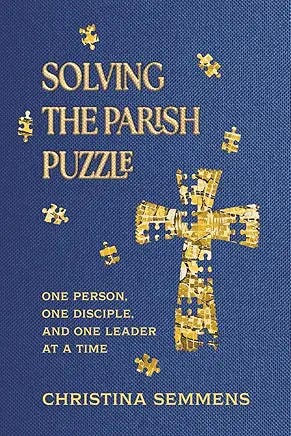
PS—If you haven’t already, go check out my latest book, Solving the Parish Puzzle: One Person, One Disciple, One Leader at a Time. It is available for purchase on Amazon.
Below are the Latest Happenings In the Say Yes to Holiness Community!
Are you looking for spiritual direction or life coaching? Then check out my christinasemmens.com website to see how you might benefit from working with me as well as get access to free resources.
Some of the FREE resources include a Spiritual Wellness Assessment, List of Recommended Books for Spiritual Reading, and a Rule of Life Planner Sheet.
This website is also where I blog and where you can learn more about working with me or learning more about spiritual direction. If you are interested, make sure to sign up for a FREE 20 minute consultation.
Finally, if you would like to support my work, you can click the link below and subscribe to the Say Yes to Holiness Substack.
Latest Posts on the Women of the New Evangelization (WINE) blog:
Two Things I Ask of You (Sept 23)
Mercy, Peace and Exultation (April 12)
Harden Not Our Hearts (Mar 9)
Guest appearance on the Equipcast Podcast:
"When God Asks, How Do You Answer?: The Power of 'Yes' with Christina Semmens
Articles on the Catholic365.com Platform:
Recognizing the Path to Life
We Are All Eucharistic Missionaires!
Latest episode of the Say Yes to Holiness podcast...
Episode #267
“Where Wonder Leads: Finding God Through Story and Imagination--1:1 Conversation with Author Eric Clayton”
Subscribe to the Say Yes to Holiness podcast!
You can listen to the latest episodes of the podcast on Apple, Spotify, or anywhere else you listen to podcasts.
You can also watch the podcast on the Say Yes to Holiness YouTube channel
Click Here to Check Out All the Podcast Episodes
The Say Yes to Holiness YouTube Channel
Episode #267
“Where Wonder Leads: Finding God Through Story and Imagination--1:1 Conversation with Author Eric Clayton”
In addition to podcasts, you can also find additional content like the Lenten Book Online Retreat—”Rooting Out Hidden Faults” by Father James McElhone on YouTube—Click here to be taken to the playlist
Update from The Catholic Leadership Puzzle
Here is the latest podcast on The Catholic Leadership Puzzle for your listening pleasure:
Solving the Parish Puzzle is now available as an Audiobook on Audible!
Have Christina guide you through her latest book!
After several months of work, my latest book, Solving the Parish Puzzle, One Person, One Disciple, and One Leader at a Time, is now available as an audiobook on Audible!
Just like the book itself, the audiobook allows me to personally guide you through the concepts of the book, and share why so many parish renewal efforts are falling short despite good intentions, dedicated leaders and numerous programs.
If you have yet to pick up a copy of Solving the Parish Puzzle: One Person, One Disciple, One Leader at a Time, I encourage you to do so, especially in light of all the wonderful reviews it has received. And if you do already have a book, please consider posting a review on Amazon—every review matters!
And if you are looking for more SPP book resources and content, you can find it on Substack at The Catholic Leadership Puzzle.